Meeting export requirements
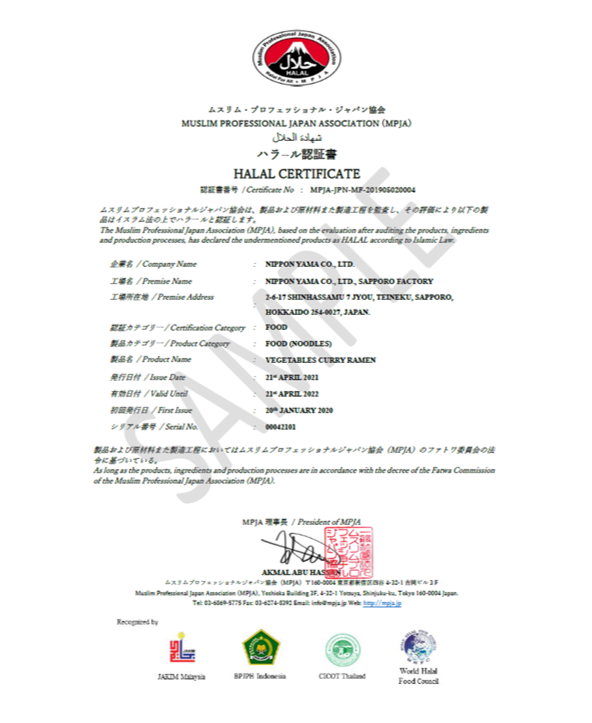
In countries covered by mutual-recognition agreements, MPJA certification may be accepted without recertification. This can address certification requirements in halal export markets.
Halal Admin
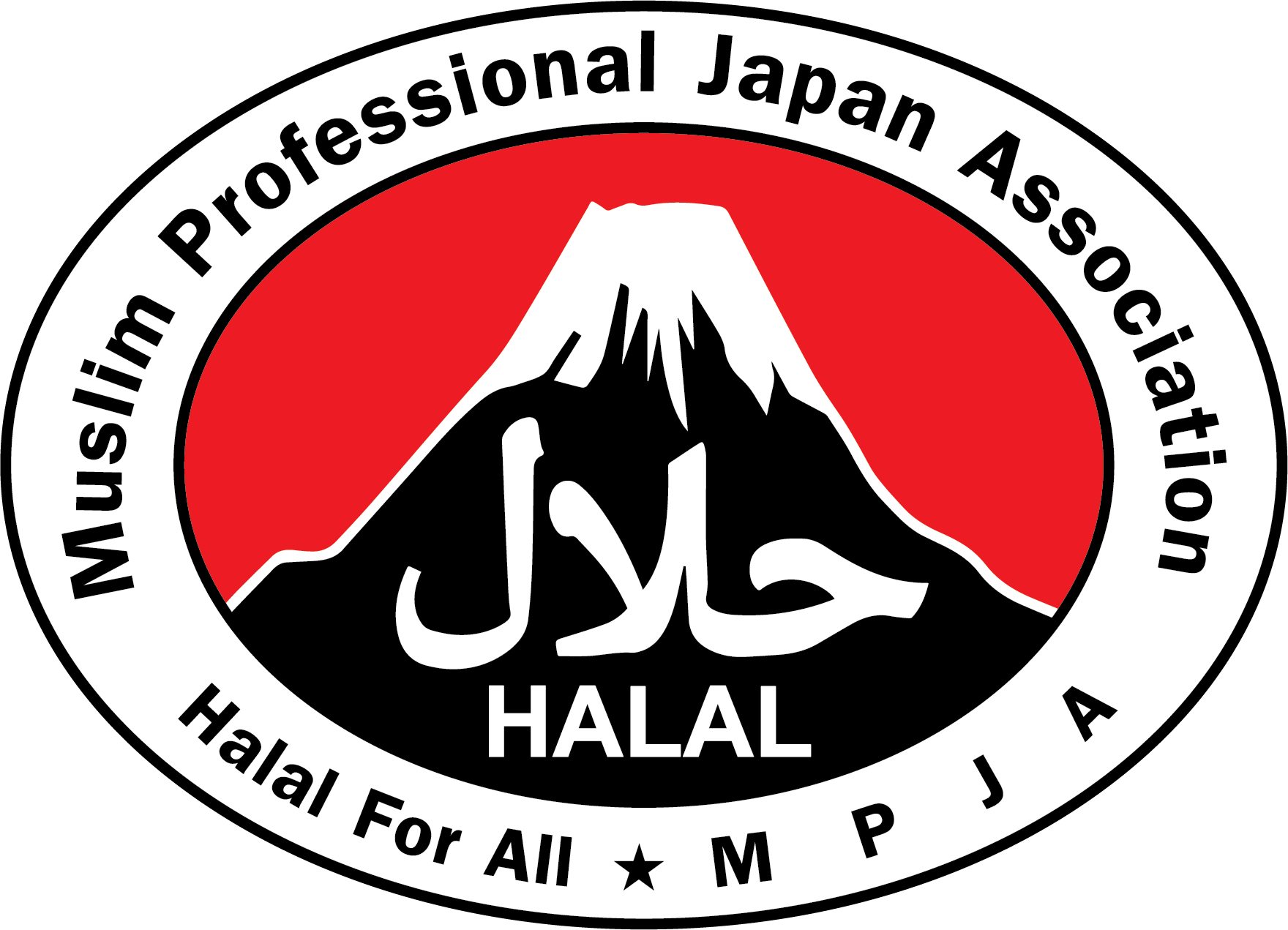
Halal Certification for Export (Halal Admin) is MPJA’s own scheme for manufacturers. It follows JAKIM (Malaysia) and BPJPH (Indonesia) requirements; MPJA obtained mutual recognition with BPJPH in 2024. Assessment covers management from ingredients to packaging and provides certification for acceptance in destination markets within the relevant recognised scope.
Our team, including Japanese Muslim staff, handles enquiries in English and Japanese.
Fit Check
What You Get
In countries covered by mutual-recognition agreements, MPJA certification may be accepted without recertification. This can address certification requirements in halal export markets.
The certification process involves establishing safety controls, information disclosure and traceability. Training halal administrators is also part of developing internal management.
The certification mark provides visible evidence of assessed compliance and transparency. It can inform business discussions and partnerships and contribute to brand value. As a system based on Islamic requirements, certification communicates product suitability and relevant safety controls to Muslim consumers, giving them further choices.
What Is Halal Certification
A certification body assesses and certifies whether a product is halal: permissible under Islamic requirements. The system was formalised in Malaysia around 40 years ago and is now an international standard alongside ISO and HACCP.
Three basic examples of haram (forbidden) are pork, alcohol, and meat other than pork that has not been slaughtered in accordance with Islamic requirements. Vegetables, fruit, crops, seafood, milk and eggs are generally halal.
Two Perspectives
Historically, Islamic scholars determined whether something was halal. Modern food and cosmetics, however, are manufactured using advanced chemistry, so jurisprudence alone is not sufficient for assessment. MPJA examines compliance from both Islamic jurisprudence and chemistry perspectives. Where an ingredient’s halal status is not apparent, we trace its source and manufacturing process. On-site audits examine receiving, production, storage and dispatch to check that non-halal substances cannot enter the process.
Our assessments address both Shariah compliance and technical controls to prevent foreign matter and cross-contamination. The standards are aligned with GMP, HACCP, FSSC and ISO. In addition to religious compliance, the assessment examines controls relevant to product quality and safety.
Export Requirements
Many governments in Muslim-majority markets are introducing halal certification requirements for imports. Without certification, products may be excluded from initial business discussions regardless of their quality. Certification from a body with the relevant mutual-recognition agreement may be accepted without recertification, subject to the recognised scope and destination-market requirements. Certification is increasingly a prerequisite for exports.
Mutual Recognition Network
MPJA has mutual-recognition agreements with 21 halal certification bodies across five world regions. These include Malaysia (JAKIM recommendation) and Indonesia (mutual recognition with BPJPH since 2024). In Asia, the network extends to Thailand, South Korea, China, India, Vietnam, Sri Lanka, the Philippines and Hong Kong. It also covers Europe (the Netherlands, Poland, Germany, France, Spain and Austria), North America (the United States and Canada), South America (Argentina and Brazil), and Africa (South Africa). MPJA received recognition from Singapore’s MUIS in 2026. These agreements allow acceptance without recertification within the scope and conditions of each agreement.
MPJA has extensive certification experience for exports to Malaysia, Indonesia and Thailand. Its certification mark is accepted in these three markets within the relevant recognised scope. Recognition by each overseas body is limited to its own approved scope.
Mutual Recognition — JAKIM (Malaysia)Mutual Recognition — BPJPH (Indonesia)
 BPJPH (Indonesia)
 CICOT (Thailand)
 HAC (Sri Lanka)
 HCA (Vietnam)
 HCS Chongqing (China)
 Halal India (India)
 HICCIP (Philippines)
 IFRC (Hong Kong)
 JAKIM (Malaysia)
 KHA (South Korea)
 KMF (South Korea)
 MUIS (Singapore, 2026)
 SSPY (China)
 NIHT (South Africa)
 HQC (Netherlands, Poland, Germany, France)
 Instituto Halal (Spain)
 IIDC (Austria)
 HCC (United States)
 HMCA (Canada)
 CIRA (Argentina)
 CDIAL Halal (Brazil)
Categories & Examples
A certification mark does more than indicate that an ingredient list contains no pork, alcohol or non-halal meat. Assessment also covers the origins of every listed ingredient. Ingredients used in Japan may be derived from pork; examples include shortening, lard and gelatine. Certification requires such ingredients to be excluded or replaced with halal alternatives, such as suitable fish-derived ingredients.
Japanese teas including sencha, matcha, hojicha and genmaicha; ramen and udon broths; sauces; sushi vinegar; dried and fresh noodles; and roasted coffee beans. Food ingredients such as yeast, calcium and collagen are also covered.
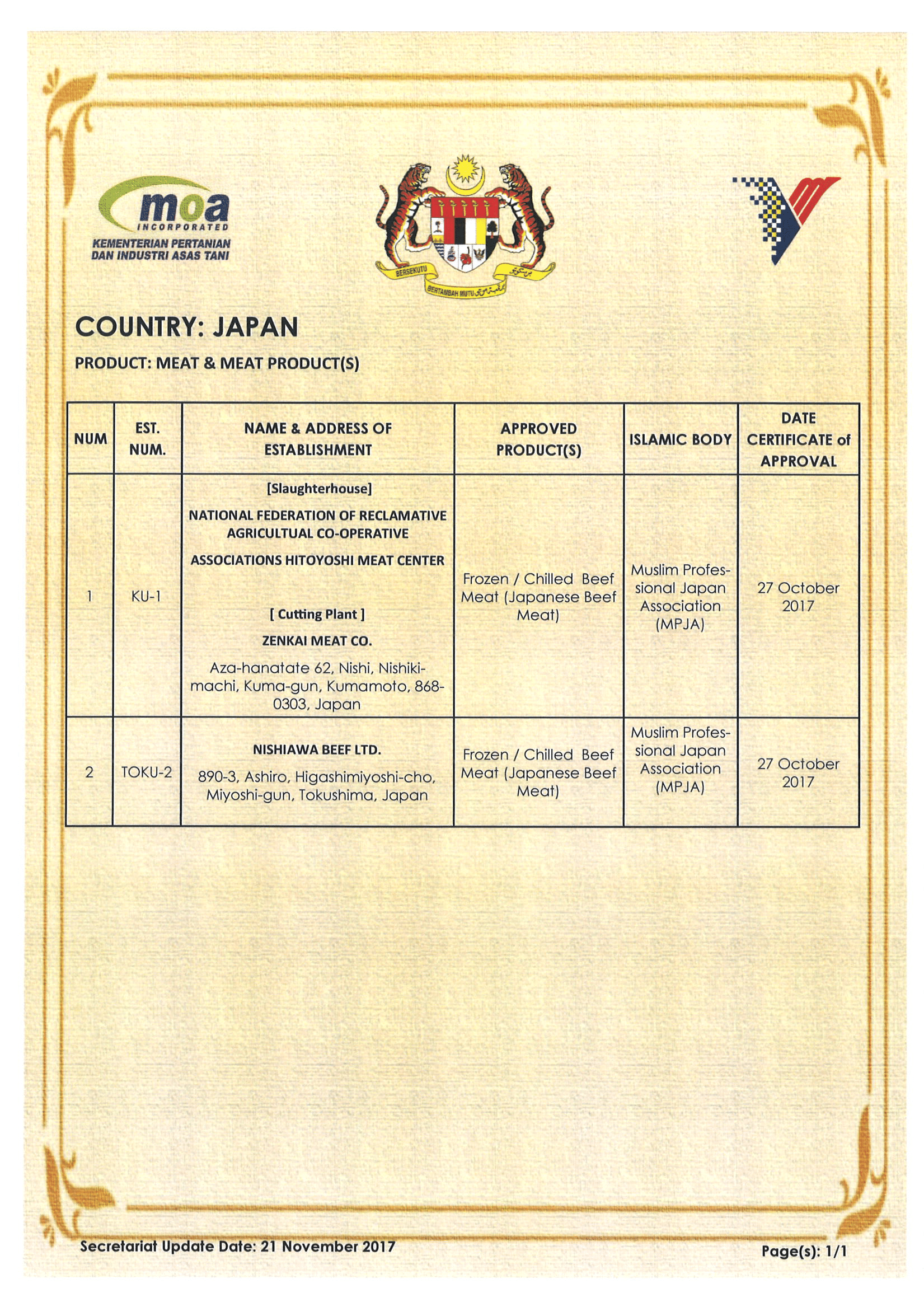
Wagyu and other beef, as well as chicken, duck and goat meat. In 2017, MPJA carried out Japan’s first halal certification covering every animal processed at a slaughterhouse. MPJA certification also enabled the world’s first official halal wagyu export, providing experience in technically demanding categories such as livestock products.
In Malaysia and Indonesia, certification increasingly extends beyond food to products that come into contact with the body, including cosmetics. Examples include squalane, petroleum jelly, shea butter oil, almond oil, lanolin and silica powder.
Minerals such as magnesium oxide and magnesium carbonate, L-carnosine, and powdered plant extracts including shiitake mushroom and shiso.
Household products such as silver-ion water and flocculants, primary food packaging and food-contact materials, animal-derived products such as hair, skin and bone, and chemicals for drinking-water treatment. This category covers products outside food, cosmetics and pharmaceuticals.
Halal management during storage and transport is also within MPJA’s certification scope. Contact us for details.
Enquiries increasingly cover slaughter, cosmetic ingredients and household products such as disinfectants. If you are unsure whether a product is eligible, ask us about its classification.
The list of certified products is published in a spreadsheet. Follow the link for the latest version.
Halal certification in the food and beverage category may be eligible for a Ministry of Agriculture, Forestry and Fisheries programme supporting new certification, with a subsidy of up to one-half of eligible costs. Application windows are limited, so enquire early in your export planning. MPJA can assist eligible businesses with the subsidy application.
Read the subsidy guide (2026 edition)Standards & Audit
MPJA’s standards follow JAKIM and BPJPH requirements. Mixing halal and non-halal substances makes the entire product non-halal. Assessments therefore examine ingredients, the origins of production equipment (excluding items such as pig-bristle brushes and pig-bone-derived filters), and segregation controls. Operating the whole facility on a halal basis is recommended. A specific production line may also be certified after rigorous assessment if an effective segregation system is established.
ISO, GMP or other international certification is not a prerequisite for applying. Businesses that already hold certification under international standards such as GMP, HACCP, FSSC or ISO are eligible for a fee discount when applying for halal certification. Drawing on more than 10 years of certification experience, MPJA audits businesses of different sizes against its requirements. Auditors with experience in halal and manufacturing assess both Islamic compliance and safety and hygiene.
Slaughterhouse Standards
Meat certification has requirements specific to slaughterhouses. In principle, the whole facility must operate on a halal basis. All slaughter must follow Islamic requirements. Qualified Muslim slaughterers must be employed and managed, and there must be no pig farm or pig slaughterhouse nearby.
Meat other than pork is not halal unless slaughter complies with Islamic requirements. MPJA’s slaughter certification standards follow JAKIM requirements. The world’s first official halal wagyu export was enabled by MPJA certification under these standards.
In 2017, MPJA carried out Japan’s first halal certification covering every animal processed at a slaughterhouse. This followed audits by the destination country and rigorous assessment involving mutual-recognition bodies and veterinarians.
Flow
*The fatwa committee is an independent third-party body that approves halal certification.
The halal seminar in step 3 is taken through the Halal Administrator (Export) course on HalaliO, the on-demand learning platform.
We explain the required documents when you enquire. Timescales and fees depend on the products and management arrangements and are presented at the meeting.
On-demand courses covering the knowledge required for MPJA certification, available whenever and wherever you study.

MPJA Representative Director Akmal Abu Hassan came to Japan at 19 as a Malaysian government-sponsored student. After graduating from Gunma University, he worked at the Bank of Tokyo-Mitsubishi. He later worked on economic exchange between Japan and Malaysia at Malaysia’s Ministry of International Trade and Industry (MITI) and the Malaysia External Trade Development Corporation (MATRADE). He received a Malaysian government award in 2012.
As a Muslim with experience of Japanese business and public administration, he responds directly to enquiries in English and Japanese. You are welcome to ask about halal even if you are unsure where to begin.
Read our Representative Director’s backgroundFAQ
This depends on the number of products, management arrangements and the extent of corrective action required. We provide indicative timescales and fees after discussing your circumstances.
No. MPJA is an independent Japanese certification body with formal mutual recognition with JAKIM, BPJPH and Thailand’s CICOT.
MPJA develops its own standards with reference to JAKIM and BPJPH requirements. The final decision on halal compliance is made by the fatwa committee, an independent third-party body.
It may be accepted if it meets MPJA’s requirements. Contact us so we can review the certificate.
No. Certification applies to the manufacturing process. Where manufacturing is outsourced, the contracted factory must obtain certification and undergo an on-site inspection.
No. An on-site audit of the manufacturing premises is required. Overseas factories should apply to a certification body in the country where they are located.
Yes. The management requirements can be met through attendance at the administrator seminar.
Yes, subject to rigorous assessment and an established system that prevents mixing with non-halal materials.
Additional fees may apply depending on the number of factories to be covered. We explain this at the meeting.
Yes. Alcohol for medical use or sterilisation may be used within the facility.
No. In accordance with BPJPH requirements, a declaration of non-use is not considered sufficient to establish halal status. Document assessment includes ingredient specifications and manufacturing process diagrams.
Drinking alcohol is produced for consumption as a beverage. Industrial alcohol is produced for other purposes. Fermented alcohol comes in different forms, so please enquire about the specific substance.
Yes. Certification to an international standard is not a prerequisite for applying.
After certification, your contact person handles enquiries about additional products and day-to-day operation individually.
Contact
Tell us about your products and export plans. At a meeting, we can explain the relevant certification requirements and assessment process.
ContactWhy MPJA